Introduction
In shrimp farming, dissolved oxygen (DO) is one of the most important factors affecting shrimp health, feed utilization, survival rate, and production consistency.
Many farmers monitor DO levels every day. However, one critical question is often overlooked:
Is oxygen reaching every area where shrimp live and grow?
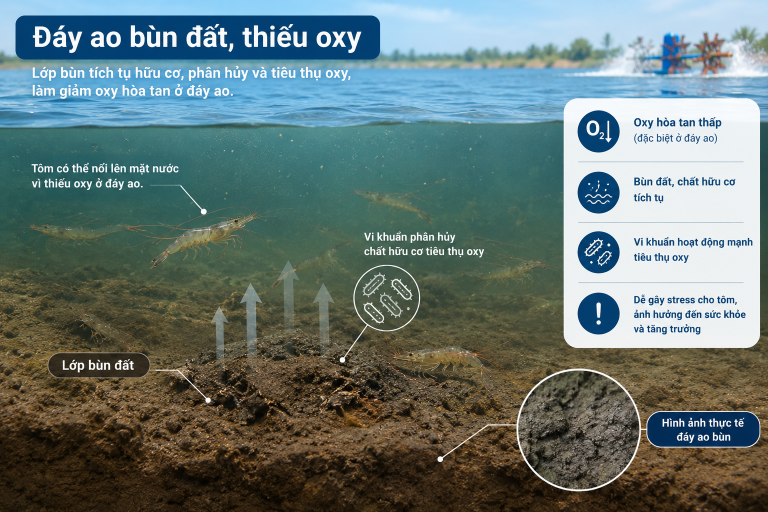
A pond may show acceptable DO readings near aerators or at the water surface, but oxygen levels can be significantly different in deeper areas, pond bottoms, and low-circulation zones.
This hidden oxygen imbalance can create stress conditions that affect shrimp performance, water quality, and farming profitability.
B.H.N Nanobubble Technology helps address this challenge by supporting more even oxygen distribution throughout shrimp ponds through advanced nanobubble technology combined with smart system design.
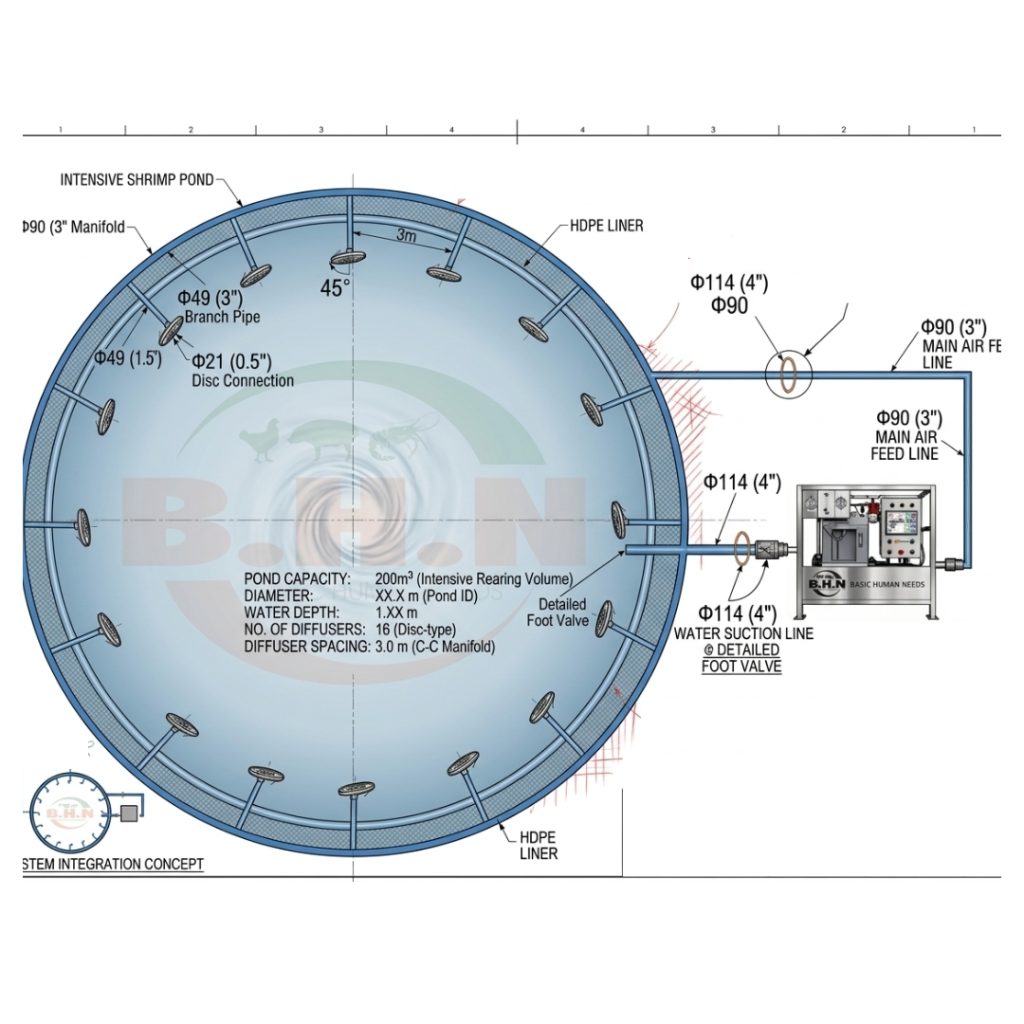
What Is Poor Oxygen Distribution in Shrimp Ponds?
Poor oxygen distribution occurs when dissolved oxygen is not evenly spread throughout the pond environment.
In many traditional pond systems, aerators mainly increase oxygen levels around their operating areas. However, oxygen may not effectively reach:
- Pond bottom areas
- Low circulation zones
- Organic matter accumulation areas
- Areas where shrimp frequently feed and stay
As a result, farmers may see acceptable average DO measurements while some areas inside the pond remain oxygen-limited.
This difference between oxygen concentration and oxygen availability is one of the hidden challenges in modern shrimp farming.
Why Does Oxygen Distribution Matter for Shrimp Health?
Shrimp do not only live near the surface. They spend significant time near the pond bottom, where they search for feed and interact with the surrounding environment.
When oxygen is not evenly distributed, several problems may occur.
1. Shrimp Experience More Environmental Stress
Low oxygen zones can force shrimp to avoid certain areas of the pond, reducing their effective living space.
Continuous exposure to unstable oxygen conditions may affect:
- Feeding activity
- Growth performance
- Molting process
- Overall shrimp health
2. Organic Matter Accumulates More Easily
Areas with limited oxygen circulation often become locations where:
- Uneaten feed accumulates
- Shrimp feces accumulate
- Organic matter decomposes more slowly
These conditions may create a more favorable environment for harmful microorganisms, including opportunistic bacteria.
Maintaining better oxygen conditions throughout the pond helps support a healthier microbial balance.
3. Feed Utilization Becomes Less Efficient
Oxygen availability is closely related to shrimp metabolism and activity.
When shrimp experience stress:
- Feeding activity may decrease
- Growth can slow down
- Feed conversion efficiency may decline
This can increase production costs and reduce farming efficiency.
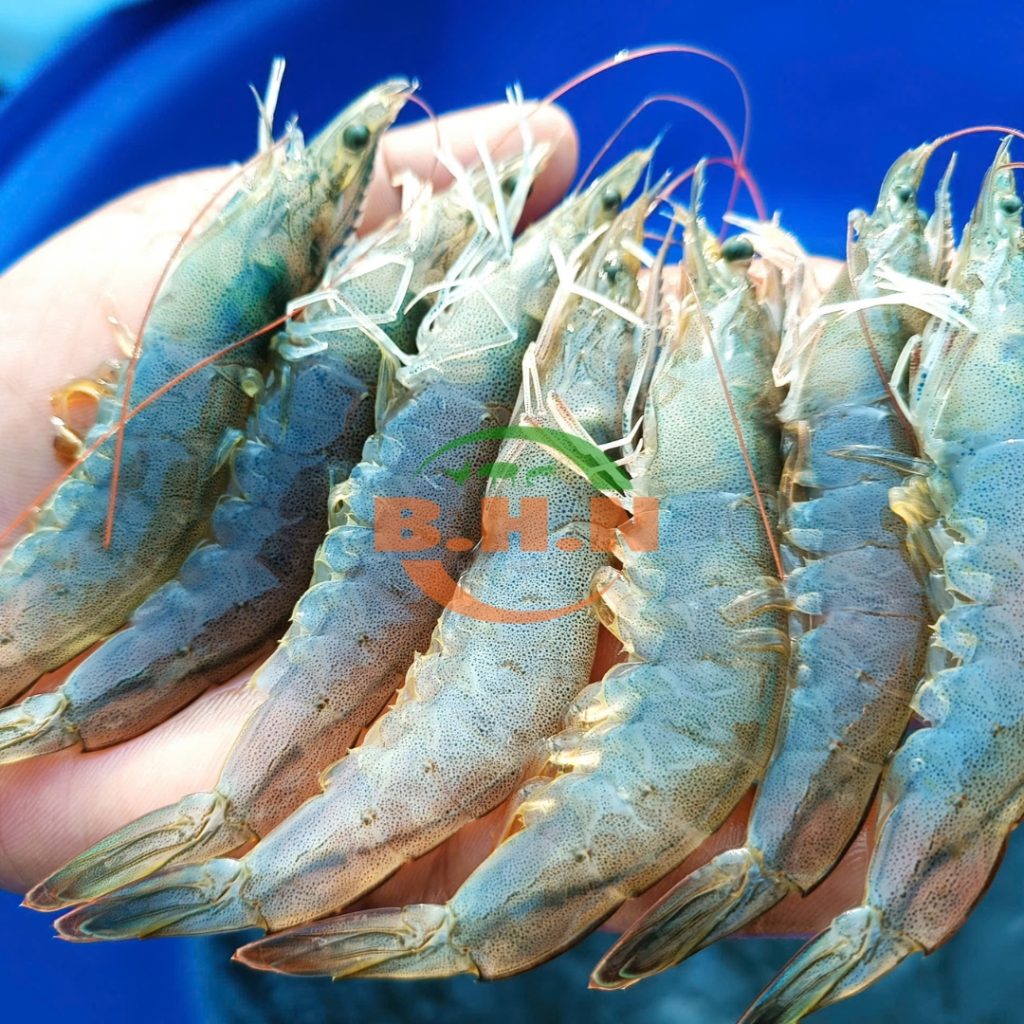
Oxygen Distribution Is More Than Just Increasing Aeration Power
A common approach in shrimp farming is adding more aerators to increase oxygen supply.
However, increasing oxygen input does not always guarantee better oxygen distribution.
The key challenge is:
How can oxygen reach the areas where shrimp actually need it?
Modern aquaculture is moving toward a more complete approach:
Not only adding oxygen, but managing oxygen distribution throughout the entire water column.
How B.H.N Nanobubble Technology Supports Better Oxygen Distribution
B.H.N Nanobubble Technology is designed based on two important principles:
1. Advanced Nanobubble Technology
Nanobubbles provide extremely small gas bubbles that can remain suspended in water longer than conventional bubbles.
This helps support:
✅ Better oxygen dispersion in water
✅ More stable dissolved oxygen conditions
✅ Improved oxygen availability throughout the pond environment
2. Smart System Design for Shrimp Farms
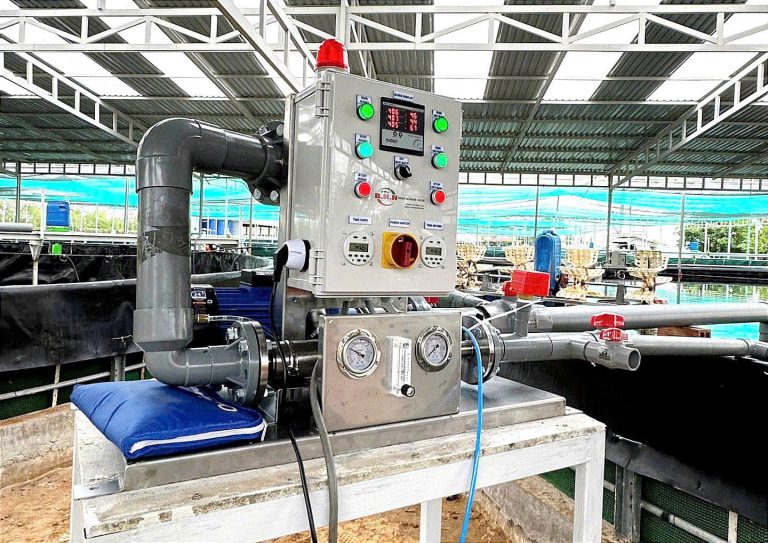
Technology performance depends not only on the nanobubble generator but also on how the system is designed.
B.H.N focuses on:
- Optimized piping layout
- Efficient water flow management
- Utilizing existing pond infrastructure whenever possible
This approach helps farms improve oxygen distribution while reducing unnecessary installation costs.
A successful oxygen management system is not only about the equipment.
It is about designing the right solution for the real farm environment.
Key Benefits of Better Oxygen Distribution in Shrimp Ponds
By improving oxygen distribution, farms can create a more stable aquatic environment that supports:
Healthier Shrimp Conditions
- Reduced oxygen stress
- Better shrimp activity
- More stable growth conditions
Better Pond Environment
- Improved bottom water conditions
- Better management of organic matter accumulation
- More balanced pond ecosystem
More Efficient Production
- Improved feed utilization
- More consistent shrimp performance
- Better production stability
Why Stable Oxygen Management Is the Future of Shrimp Farming
Successful shrimp farming is not only about achieving a target DO number at one measurement point.
It is about creating a stable environment where oxygen is available consistently throughout the areas where shrimp live, feed, and grow.
The future of sustainable shrimp farming will depend on smarter water management approaches that combine:
- Oxygen management
- Water quality monitoring
- Disease risk reduction
- Efficient farm operation
Frequently Asked Questions (FAQ)
1. Why is oxygen distribution important in shrimp ponds?
Oxygen distribution is important because shrimp require oxygen throughout the pond, especially near the bottom where they spend significant time feeding and growing. Uneven oxygen distribution can create stress zones and reduce production efficiency.
2. Is measuring DO at one location enough?
No. A single DO measurement may not represent the oxygen conditions throughout the entire pond. Multiple monitoring points and better oxygen distribution management provide a more accurate understanding of pond conditions.
3. Can nanobubbles replace traditional aerators?
Nanobubbles are not simply a replacement for all aeration systems. They are a technology that supports improved oxygen management and can be integrated into existing farm systems.
4. How does B.H.N Nanobubble Technology help shrimp farms?
B.H.N Nanobubble Technology helps support more even oxygen distribution, stable water conditions, and smarter oxygen management through advanced nanobubble generation and optimized system design.
Conclusion
The hidden cost of poor oxygen distribution is not always visible immediately.
However, unstable oxygen conditions can influence shrimp stress, feed efficiency, water quality, and production consistency.
By focusing on where oxygen goes—not only how much oxygen is added, shrimp farmers can move toward a more stable and sustainable farming approach.
B.H.N Nanobubble Technology combines advanced nanobubble technology with smart engineering design to support better oxygen management for modern shrimp farming.
Contact B.H.N Co., Ltd.
 Website: www.bhnenc.com
 Email: bhnenc@gmail.com
 Hotline: +84 28 6681 0195