Manual vs Automatic Egg Grading: Which Is Better?
As poultry farms continue to grow, one question becomes increasingly important:
Should you continue grading eggs manually, or invest in an automatic egg grading machine?
The answer depends on your production volume, labor costs, and long-term business goals.
While manual grading may still be suitable for very small farms, commercial egg producers are increasingly adopting automated egg grading systems to improve efficiency, consistency, and profitability.
In this article, we’ll compare both methods and help you determine which solution is right for your farm.
What Is Manual Egg Grading?
Manual egg grading is the traditional method where workers inspect, weigh, sort, and pack eggs by hand.
Workers typically:
- Collect eggs
- Inspect shell quality
- Separate cracked eggs
- Weigh eggs manually or with small scales
- Sort eggs by weight
- Pack eggs into trays
This method requires multiple workers and becomes increasingly difficult as production grows.
What Is Automatic Egg Grading?
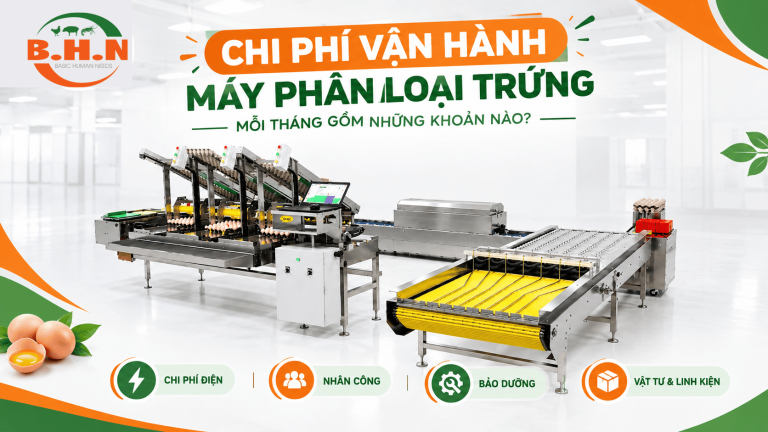
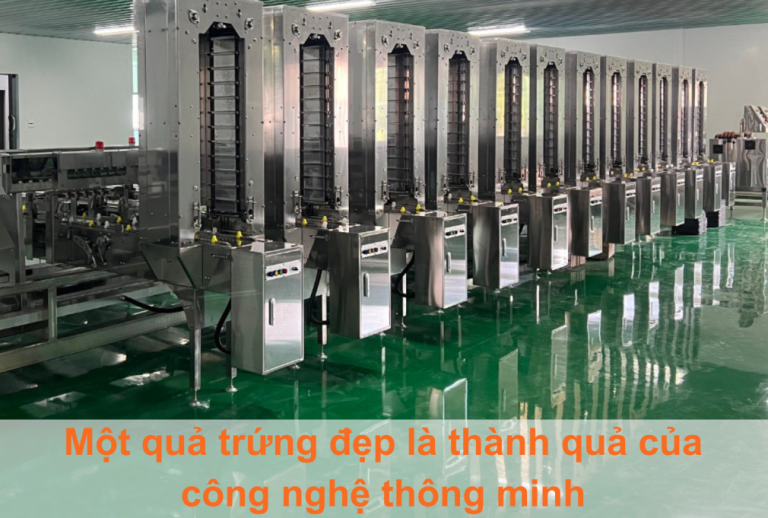
Automatic egg grading uses electronic weighing sensors, conveyors, and intelligent sorting systems to classify eggs accurately by weight.
Depending on the production line, additional modules may include:
- Automatic Egg Loader
- Egg Washing System
- Egg Drying System
- UV Sterilization
- Automatic Egg Grading
- Automatic Egg Packing
Modern systems can process between 10,000 and 120,000 eggs per hour, making them suitable for commercial farms and egg packing centers.
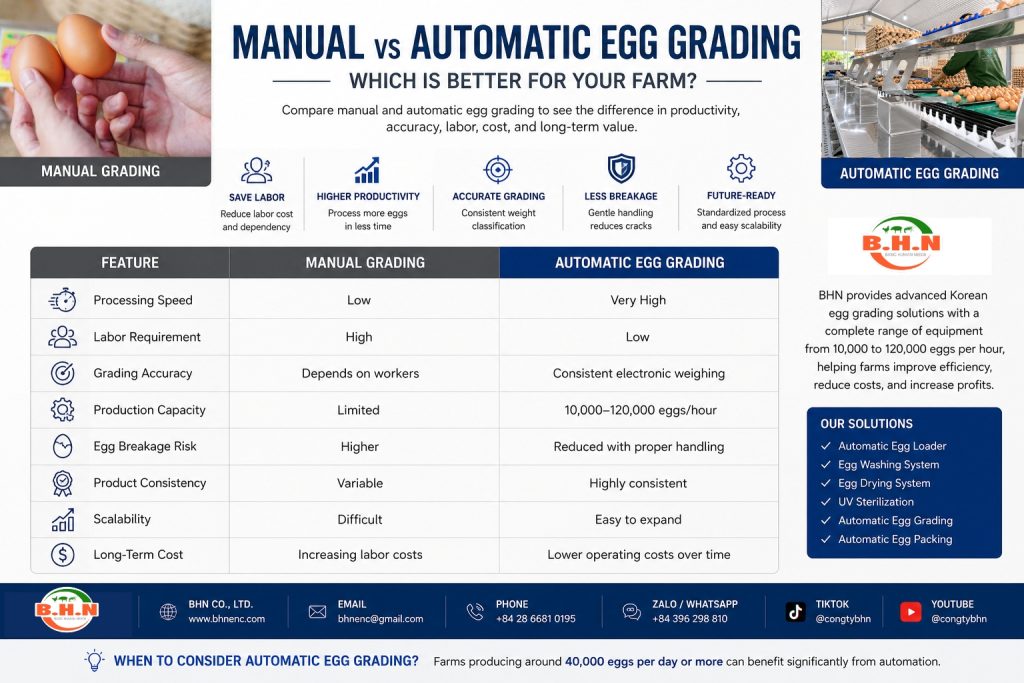
Labor Costs
One of the biggest challenges facing poultry farms worldwide is rising labor costs.
Manual grading requires several workers to perform repetitive tasks throughout the day.
Automatic egg grading significantly reduces manual handling by automating weighing, sorting, and transporting eggs through the production line.
For many commercial farms, labor savings become one of the biggest contributors to return on investment.
Productivity
A manual team can only process a limited number of eggs each day.
An automatic egg grading machine can process from 10,000 to 120,000 eggs per hour, depending on the model.
This higher throughput enables farms to:
- Process eggs faster
- Meet customer delivery schedules
- Handle seasonal production peaks
- Expand production without proportionally increasing labor
Accuracy Matters
Retailers, supermarkets, and distributors expect eggs to be graded consistently.
Manual grading may vary between workers, especially during long shifts.
Automatic systems use electronic weighing technology to provide consistent grading according to preset weight categories.
This improves product quality and customer confidence.
Egg Safety and Product Quality
Many commercial egg processing lines also include optional modules such as:
- Egg Washing
- Egg Drying
- UV Sterilization
These features help improve hygiene before eggs reach the market while supporting more standardized processing.
When Should You Upgrade to Automatic Egg Grading?
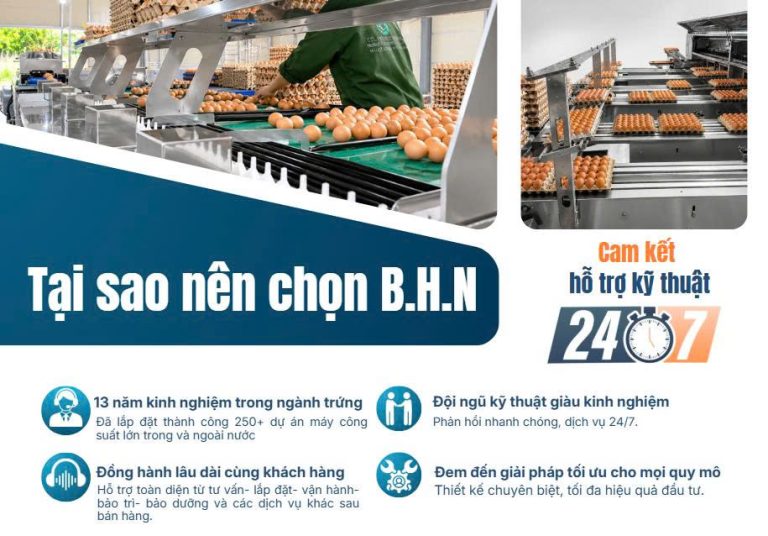
Based on BHN’s experience, farms producing around 40,000 eggs per day or more often begin to benefit significantly from automation.
At this production level, farms usually face:
- Higher labor costs
- Greater pressure to increase productivity
- Growing customer requirements for consistent grading
- Expansion plans
Automation helps address all of these challenges simultaneously.
Return on Investment (ROI)
Many farmers ask:
“How long does it take to recover the investment?”
There is no single answer because ROI depends on:
- Daily egg production
- Labor costs
- Farm size
- Selling price
- Production efficiency
- Automation level
A simple formula is:
Payback Period = Investment Cost ÷ Additional Monthly Benefits
Additional benefits may include:
- Labor savings
- Reduced egg breakage
- Increased productivity
- Better product consistency
- Business expansion opportunities
Why Many Poultry Farms Choose Korean Egg Grading Machines
Korean egg grading technology has earned a strong reputation for reliability, precision, and long-term durability.
BHN supplies complete Korean egg grading solutions with capacities ranging from 10,000 to 120,000 eggs per hour.
Available modules include:
- Automatic Egg Loader
- Egg Washing
- Egg Drying
- UV Sterilization
- Automatic Egg Grading
- Automatic Egg Packing
Our solutions have been installed across Vietnam, Thailand, South Korea, Taiwan, Sri Lanka, and other Asian markets.
One of our largest installations is an 80,000 eggs/hour egg grading machine in Gangwon, South Korea, demonstrating the capability of Korean engineering for large-scale poultry operations.
Frequently Asked Questions
Is manual egg grading still suitable?
Yes. Small farms with relatively low daily production may continue using manual grading.
What is the biggest advantage of automatic egg grading?
Higher productivity, reduced labor requirements, and consistent grading accuracy.
Can automatic egg grading reduce cracked eggs?
Yes. Modern conveyor systems are designed to handle eggs gently, helping reduce unnecessary impacts during processing.
Can I upgrade the machine later?
Yes. Many commercial systems allow additional modules such as washing, drying, UV sterilization, or packing to be added as production grows.
What machine capacity should I choose?
The ideal capacity depends on your daily egg production, future expansion plans, and operational requirements.
Conclusion
Manual egg grading may work well for small-scale operations, but as production increases, automation becomes a practical investment rather than a luxury.
An automatic egg grading machine not only improves productivity but also helps reduce labor costs, standardize product quality, and prepare your farm for future growth.
For commercial poultry farms, investing in automation is often a strategic decision that supports long-term competitiveness.
Contact BHN
🌐 Website: bhnenc.com
📧 Email: bhnenc@gmail.com
☎️ Phone: +84 28 6681 0195
💬 Zalo: +84 396 298 810
🎵 TikTok: https://tiktok.com/@congtybhn
▶️ YouTube: https://youtube.com/@congtybhn