Many farm owners believe that only large-scale farms with hundreds of thousands of laying hens need to invest in an automatic egg grading machine. However, is this assumption still relevant as labor costs continue to rise and the demand for consistent egg quality increases?
If you operate a farm with fewer than 50,000 laying hens and are wondering whether investing in an egg grading machine is the right choice, this article will help you assess your actual needs and make a more informed investment decision while optimizing costs.
Do Farms with Fewer Than 50,000 Laying Hens Need an Egg Grading Machine?
The answer is:
It depends. The right choice depends on the farm’s production volume, business model, and future growth plans.
More importantly, the need for an egg grading machine should not be determined solely by the number of laying hens.
In reality, many farms with around 20,000–40,000 laying hens still need to handle tens of thousands of eggs every day. As the workload increases, continuing to grade eggs manually can reduce productivity, increase labor costs, and affect order fulfillment.
Therefore, the key factors to consider are daily egg production, current labor requirements, and the farm’s future expansion plans.
Limitations of Manual Egg Grading
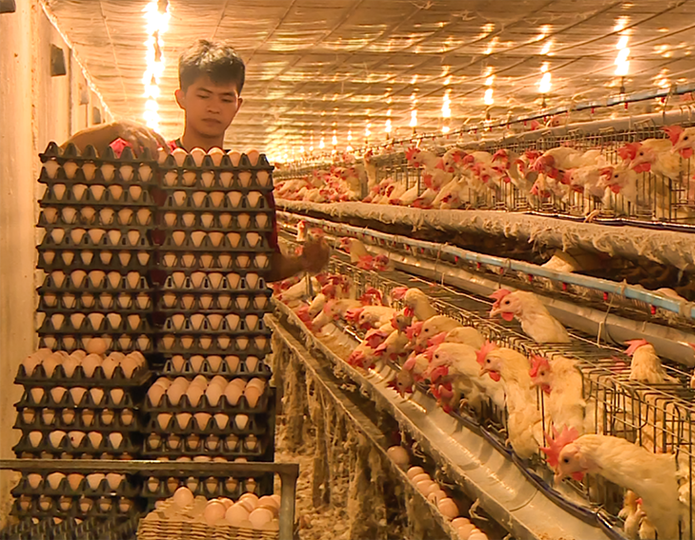
In the early stages, many farms choose to grade eggs manually because of the relatively low initial investment. However, as production volume increases, this method can present several limitations.
1. Heavy Reliance on Labor
To manually grade tens of thousands of eggs every day, farms need workers to handle various stages of the process, including:
- Inspecting eggs
- Sorting eggs by weight
- Placing eggs into trays
- Packing eggs
Heavy reliance on manual labor can cause operating costs to increase as production volume grows. It can also make it more difficult for farms to maintain consistent productivity when labor availability fluctuates.
2. Inconsistent Grading Accuracy
Each worker may assess and classify eggs differently, which can lead to inconsistencies during the grading process.
This can affect:
- Selling prices
- Brand reputation
- The ability to meet the requirements of supermarkets and food processing businesses
3. Difficulties in Scaling Up Production
As order volumes increase, farms often need to hire additional workers to keep up with production and delivery schedules.
However, recruiting and training workers is becoming increasingly challenging, particularly in areas with concentrated poultry farming operations.
For farms planning to expand production, relying entirely on manual egg grading can therefore make it more difficult to maintain consistent productivity, grading accuracy, and operational efficiency.
When Should a Chicken Farm Invest in an Egg Grading Machine?
There is no fixed threshold that applies to every farm. However, if you experience one or more of the following signs, it may be the right time to consider investing in an egg grading machine.
1. Rapidly Increasing Egg Production
If your farm collects tens of thousands of eggs every day and spends many hours sorting them manually, an egg grading machine can help shorten processing time and increase productivity.
2. Increasing Labor Costs
Labor costs are always a significant expense in the egg sorting and packaging process.
Investing in a machine can help:
- Reduce the number of direct labor workers.
- Optimize operating costs.
- Maintain stable productivity.
3. Customers Require Accurate Grading
Supermarkets, distributors, and food processing companies often require eggs to be graded by weight with consistent sizing.
An egg grading machine helps:
- Improve grading accuracy.
- Ensure consistent product quality.
- Enhance your brand image.
4. The Farm Plans to Expand
If your goal is to increase the size of your chicken flock over the next few years, investing in a machine early can help establish a standardized production process and reduce pressure as production volume increases.
5. You Want to Professionalize the Production Process
An automated egg grading line not only helps increase productivity but also creates a more professional image in the eyes of customers and business partners.
Choosing an Egg Grading Machine Based on Farm Size
One of the most common questions from customers is: “What capacity egg grading machine should my farm choose?”
In practice, choosing the right machine does not depend entirely on the number of laying hens. Instead, it should be based on:
- The daily egg production volume.
- Operating hours.
- The number of workers.
- Future expansion plans.
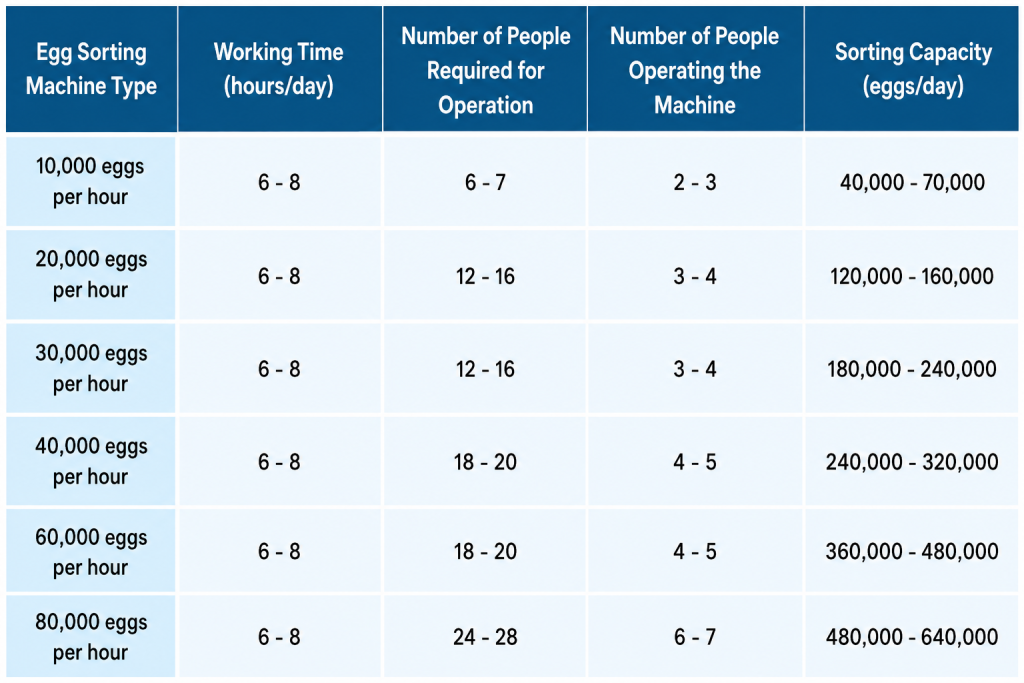
Note: The table above is for reference only. The appropriate machine capacity also depends on the laying rate, operating hours, and production process of each farm. The B.H.N technical team will recommend the most suitable solution based on the customer’s actual needs.
When Do You Not Need to Invest in an Egg Grading Machine Yet?
Not every farm needs to invest in an egg grading machine immediately.
You can continue with manual egg grading if:
- Your egg production volume is still low.
- Labor costs are not yet a major concern.
- You mainly sell eggs to local customers.
- You do not have plans to expand in the near future.
However, if these factors change, switching to an automated grading system can help your business save time and improve operational efficiency.
Benefits of Investing in an Egg Grading Machine at the Right Time
Investing in an egg grading machine is not only about replacing manual labor. It can also provide significant long-term value for your business.
1. Increase Processing Capacity
The machine can process a large number of eggs in a short time, helping farms handle large orders and ensure on-time delivery.
2. Reduce Labor Costs
Automation reduces reliance on manual labor, especially as labor costs continue to increase.
3. Improve Grading Accuracy
Eggs are graded by weight with a high level of consistency, helping improve overall product quality.
4. Reduce Product Loss
The conveying and grading system is designed to minimize impact, helping reduce cracks and breakage during the handling process.
5. Build a Foundation for Production Expansion
As production volume increases, businesses do not need to completely change their existing process. Instead, they can simply upgrade to a suitable processing capacity.
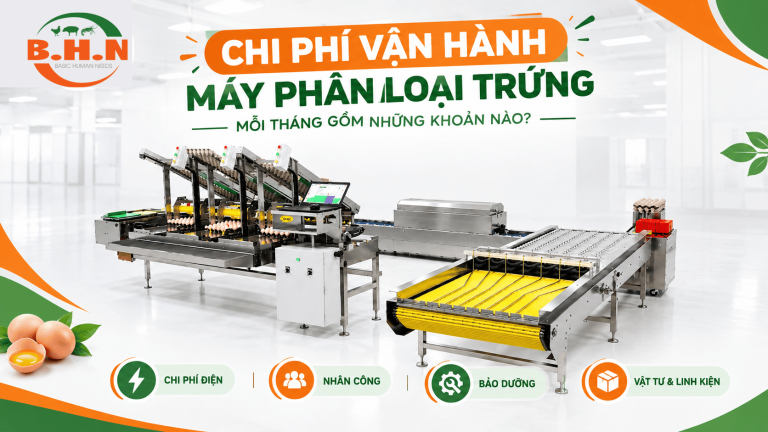
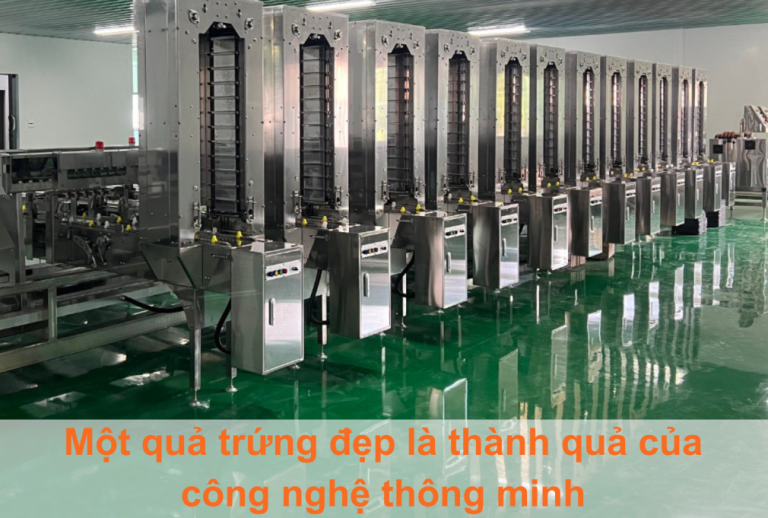
B.H.N Korean Technology Egg Grading Machines – Suitable Solutions for Farms of Various Scales
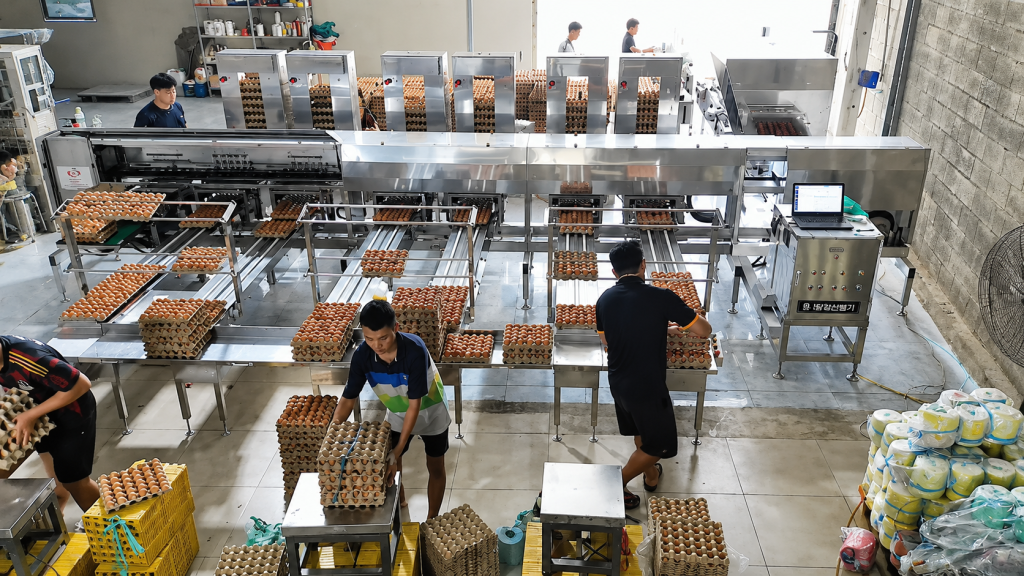
B.H.N offers a wide range of egg grading machines with capacities from 10,000 to 80,000 eggs per hour, meeting the needs of medium- and large-scale farms as well as egg production businesses.
B.H.N’s solutions offer numerous benefits:
- Fast and accurate egg grading.
- Reduced labor costs.
- Minimized cracking and breakage during handling and transportation.
- Easy integration with packaging lines.
- Supports future production expansion.
Choosing the right capacity from the beginning can help businesses optimize investment efficiency and enhance their competitiveness in the market.
Frequently Asked Questions
1. Should a farm with 20,000–30,000 chickens invest in an egg grading machine?
Yes, it can be a worthwhile investment. If the farm has a high egg output, high labor costs, or plans to supply supermarkets and partners that require accurate grading, investing in an egg grading machine is a solution worth considering.
2. Can an egg grading machine completely replace manual labor?
No. The machine automates the grading and egg handling processes, while workers are still responsible for quality inspection, packaging, and system management.
3. How long does it take to recover the investment?
The payback period depends on the farm’s egg production volume, labor costs, and operating intensity. For farms with stable production and long-term growth plans, investing in an egg grading machine can deliver clear economic benefits over time.
Conclusion
Egg grading machines are not only for large-scale farms. For farms with fewer than 50,000 laying hens, if egg production is increasing, labor costs are high, or there are plans to expand production, investing in an egg grading machine is a practical step toward increasing productivity and professionalizing the production process.
Rather than looking only at the number of chickens, farms should consider egg production volume, market demand, and growth objectives as a whole when choosing the appropriate machine capacity. Making the right investment at the right time can help businesses optimize costs, improve product quality, and build a sustainable competitive advantage.
Contact B.H.N for the Right Solution
Every farm has different production scales and requirements. Contact B.H.N today to receive technical consultation on the most suitable egg grading machine based on your actual production volume, helping optimize investment costs and improve production efficiency.
B.H.N – Korean-technology egg grading machine solutions, supporting modern farms and sustainable growth.
 028.668.101.95 / 96
 0396.298.810 (Zalo)