When Should You Invest in an Egg Grading Machine Instead of Manual Sorting?
Quick Answer
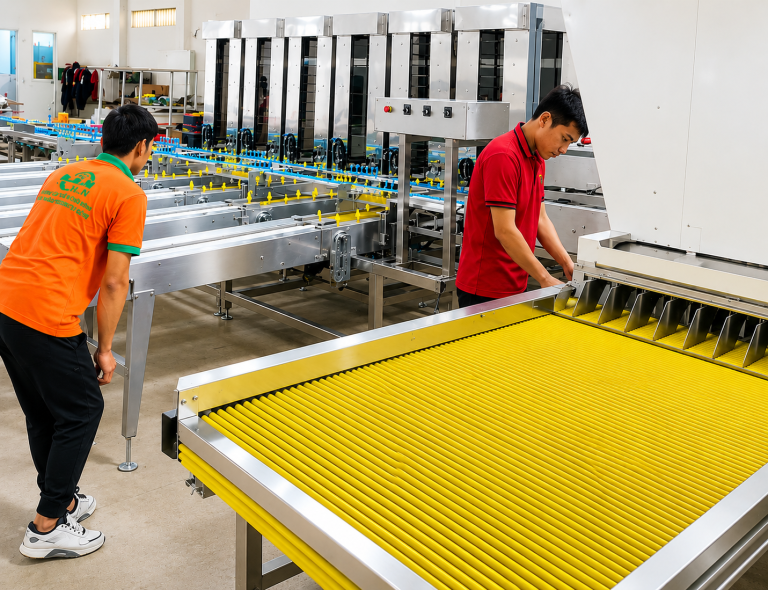
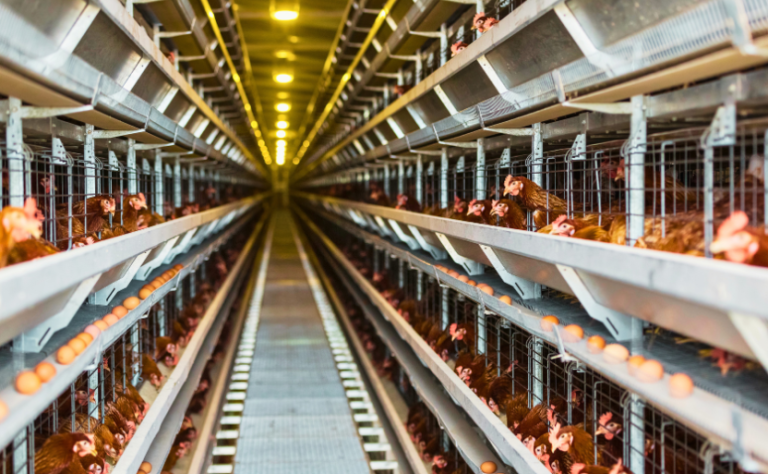
A poultry farm should consider investing in an automatic egg grading machine when manual sorting can no longer meet production requirements. For most commercial layer farms, this typically happens when daily production reaches around 40,000 eggs or more, where labor costs, sorting accuracy, and operational efficiency become major concerns.
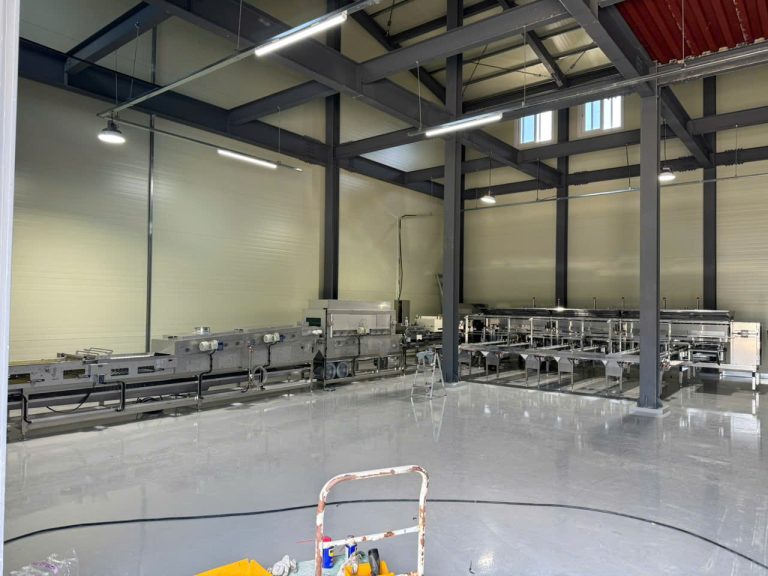
Modern egg grading machines can process 10,000 to 120,000 eggs per hour, providing a scalable solution for farms of different sizes.
Why Manual Egg Sorting Becomes a Challenge
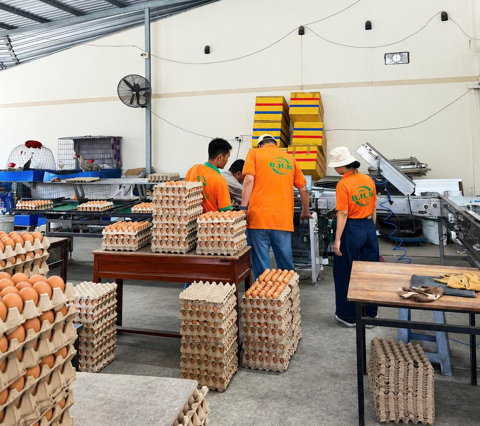
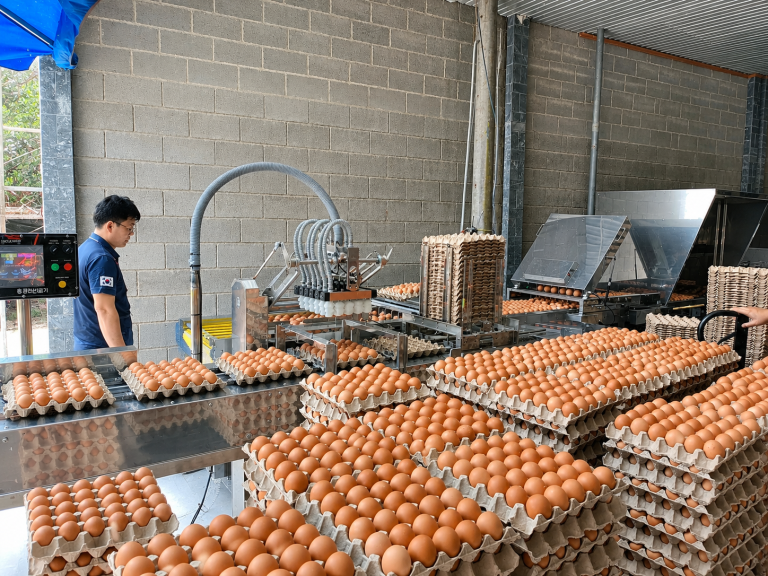
Many farms begin with manual egg grading because it requires little initial investment.
However, as production increases, manual sorting often creates operational bottlenecks.
Common challenges include:
- Inconsistent grading accuracy
- Higher labor costs
- Slower processing speed
- Increased risk of egg damage
- Difficulty meeting retailer or export standards
These problems become more significant as the farm grows.
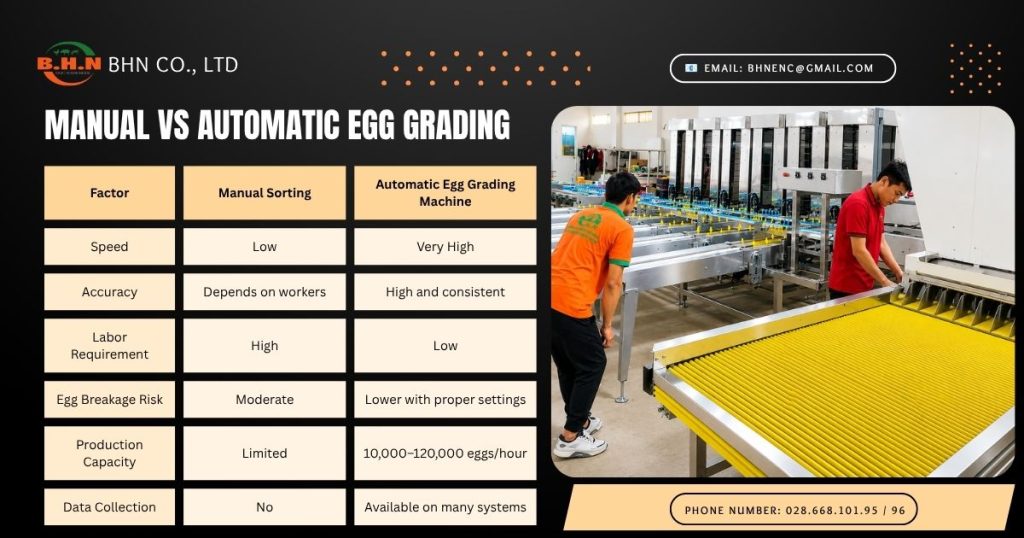
Although manual grading may work for small farms, automation becomes increasingly valuable as production expands.
When Is It Time to Upgrade?
There is no single number that fits every farm.
However, the following guide can help.
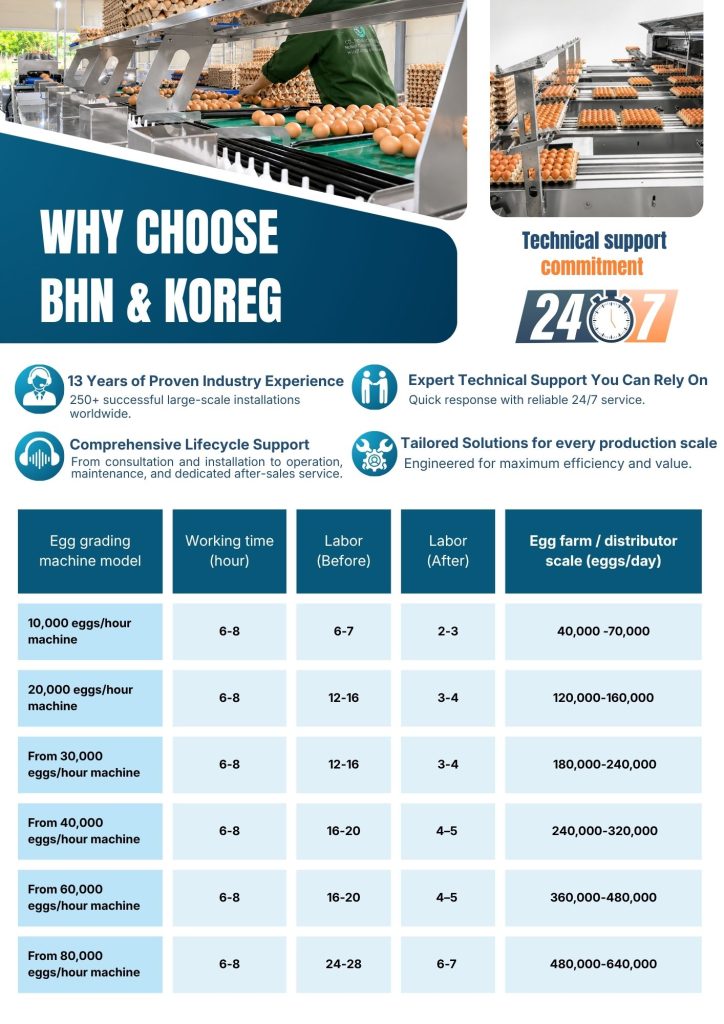
The right machine depends not only on production volume but also on labor availability, customer requirements, and future expansion plans.
Five Signs Your Farm Needs Automation
1. Labor Costs Continue to Increase
Finding and retaining workers is becoming more difficult in many countries.
Automation reduces dependence on manual labor while improving consistency.
2. Sorting Accuracy Is Affecting Sales
Many buyers require eggs to meet strict weight classifications.
Automatic grading provides more consistent results than manual sorting.
3. Production Continues to Grow
As daily egg output increases, manual grading can become the slowest part of the production process.
Automation removes this bottleneck.
4. Customers Demand Better Quality
Retail chains and distributors often expect uniform egg sizes and professional packaging.
Consistent grading improves product presentation and customer confidence.
5. You Plan to Expand
Purchasing an egg grading machine before reaching maximum production allows farms to scale efficiently without repeatedly increasing labor.
Why Capacity Matters?
Choosing the correct machine capacity is just as important as deciding to automate.
For example:
- 10,000 eggs/hour for growing commercial farms
- 20,000–40,000 eggs/hour for medium-sized operations
- 60,000–120,000 eggs/hour for large industrial egg producers
Selecting a machine that matches both current production and future growth helps maximize return on investment.
Why Many Farms Choose Korean Egg Grading Technology
Korean egg grading machines are widely recognized for:
- Reliable engineering
- Stable grading accuracy
- Durable construction
- Easy maintenance
- Long service life
- Compatibility with modern egg processing lines
For farms planning long-term automation, Korean technology provides a balance between performance and reliability.
Why Choose BHN?
BHN supplies Korean egg grading solutions for commercial poultry farms across Southeast Asia.
Available capacities include:
- 10,000 eggs/hour
- 20,000 eggs/hour
- 30,000 eggs/hour
- 40,000 eggs/hour
- 60,000 eggs/hour
- 80,000 eggs/hour
- 120,000 eggs/hour
Beyond equipment supply, BHN helps customers select the most suitable solution based on farm size, production goals, and future expansion plans.
Frequently Asked Questions
Is manual egg sorting suitable for commercial farms?
Manual sorting may work for small farms, but larger operations often benefit from automation to improve efficiency and consistency.
At what production level should I buy an egg grading machine?
Many commercial farms begin considering automation when daily production reaches approximately 40,000 eggs, although the decision depends on labor costs and business objectives.
Can I upgrade later to a larger machine?
Yes. Many manufacturers, including BHN, offer multiple machine capacities, allowing farms to expand as production grows.
Which egg grading machine capacity should I choose?
The best capacity depends on your current production, expected growth, labor availability, and processing workflow.
Conclusion
Investing in an automatic egg grading machine is not simply about replacing manual labor—it is about improving efficiency, ensuring consistent quality, and preparing your farm for future growth.
For many commercial poultry farms, automation becomes a practical investment once production reaches around 40,000 eggs per day or when manual grading begins to limit operational performance.
With Korean egg grading solutions ranging from 10,000 to 120,000 eggs per hour, BHN provides scalable systems designed to support farms at every stage of development.
Contact BHN
If you’re planning to automate your egg grading process, our engineering team can help you determine the right machine based on your daily egg production, farm size, and future expansion plans.
BASIC HUMAN NEEDS (BHN)
🌐 Website: bhnenc.com
📧 Email: bhnenc@gmail.com
☎️ Phone: +84 28 6681 0195
🎵 TikTok: https://tiktok.com/@congtybhn
▶️ YouTube: https://youtube.com/@congtybhn