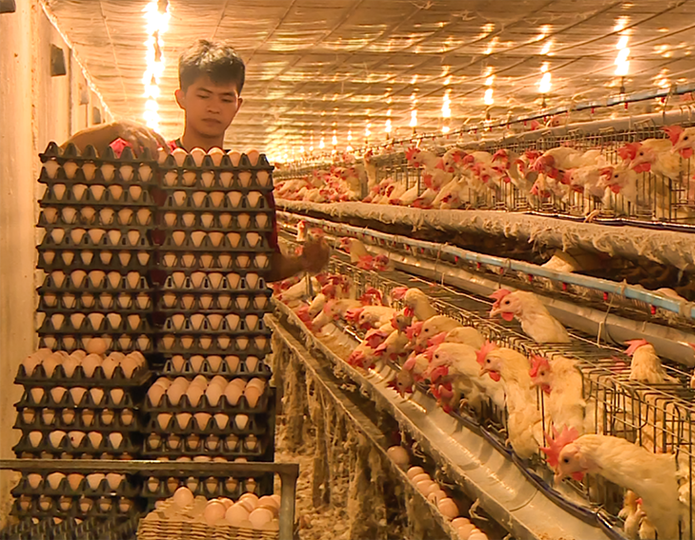
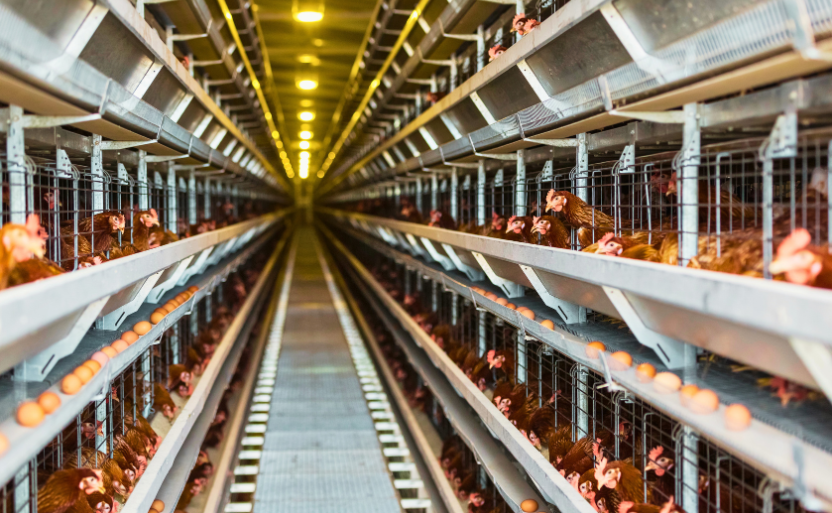
If your farm produces around 40,000 eggs per day—equivalent to approximately 44,000 to 47,000 laying hens with an average laying rate of 85–90%—it is usually the right time to invest in an automatic egg grading machine.
At this production level, manual egg grading often becomes one of the biggest operational bottlenecks. Labor costs increase, grading consistency declines, and it becomes more difficult to meet the quality standards required by supermarkets, wholesalers, and food distributors.
An automatic egg grading machine helps solve these challenges while preparing your farm for future growth.
Why Daily Egg Production Matters More Than Flock Size
Many poultry farmers ask: “I have 50,000 laying hens. Do I need an egg grading machine?”
The better question is:”How many eggs do you collect every day?”
An egg grading machine is designed to process eggs, not hens.
Egg production depends on several factors, including:
- Hen age
- Breed
- Nutrition
- Farm management
- Seasonal conditions
That is why professional equipment suppliers calculate machine capacity based on daily egg output, not flock size alone.
Typical Egg Production by Farm Size
Assuming an average laying rate of 90%, daily production looks like this:
| Laying Hens | Daily Eggs |
|---|---|
| 20,000 | 18,000 |
| 30,000 | 27,000 |
| 40,000 | 36,000 |
| 45,000 | 40,500 |
| 50,000 | 45,000 |
| 60,000 | 54,000 |
| 80,000 | 72,000 |
Once production reaches approximately 40,000 eggs per day, manual grading becomes significantly less efficient.
Why 40,000 Eggs Per Day Is the Turning Point
A common misconception is that a 10,000 eggs/hour egg grading machine should only be purchased by farms producing 80,000 eggs per day.
This assumption ignores how modern poultry farms actually operate.
Although a machine can technically process:10,000 eggs/hour × 8 hours = 80,000 eggs/day grading is only one part of the daily workflow.
Farm workers also need to:
- Collect eggs from poultry houses
- Inspect cracked eggs
- Grade eggs by weight
- Pack trays and cartons
- Prepare shipments
- Clean and maintain equipment
For this reason, most farms do not want the grader running continuously for eight hours.
Instead, they aim to complete grading within 4–5 hours, leaving sufficient time for packing and logistics.
That is why farms producing 40,000–50,000 eggs per day often choose a 10,000 eggs/hour egg grading machine.
Manual Grading vs Automatic Egg Grading
Manual Egg Grading
As production grows, manual grading creates several operational challenges:
- Higher labor costs
- Inconsistent weight classification
- Slower packing process
- Increased risk of cracked eggs
- Difficulty meeting retailer quality standards
These issues become more noticeable as daily production increases.
Automatic Egg Grading
An automatic egg grading system provides several long-term advantages:
Faster Processing
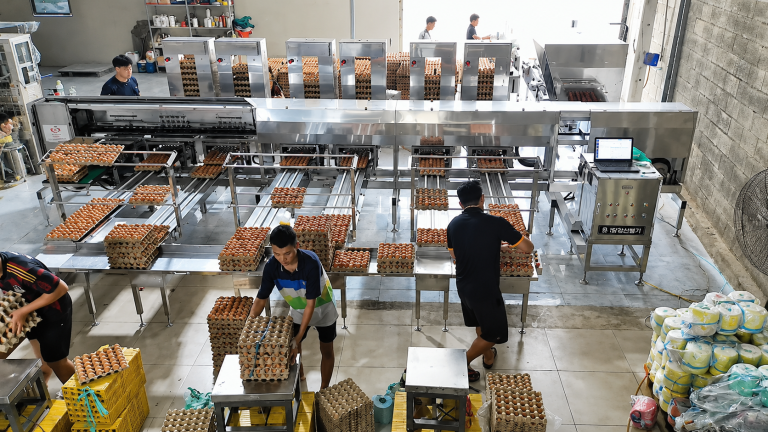
A 10,000 eggs/hour machine can grade approximately 40,000 eggs in just four hours.
Consistent Weight Classification
Electronic weighing sensors classify eggs accurately according to preset weight ranges.
Reduced Labor Requirements
Automation minimizes dependence on manual labor while improving productivity.
Lower Breakage Rates
Carefully designed conveyors reduce impact during transportation, helping preserve egg quality.
Better Scalability
As production increases, farms can expand without completely redesigning their post-harvest workflow.
Which Farms Benefit Most?
Based on daily production, the following guideline is commonly used:
| Daily Egg Production | Recommendation |
|---|---|
| Below 25,000 eggs | Manual grading is usually sufficient. |
| 25,000–40,000 eggs | Plan for automation if expansion is expected. |
| 40,000–70,000 eggs | Ideal for a 10,000 eggs/hour egg grading machine. |
| Above 70,000 eggs | Consider higher-capacity grading systems. |
Choosing the Right Egg Grading Machine
Selecting the right machine involves more than matching production capacity.
A complete evaluation should include:
- Daily egg production
- Future expansion plans
- Available labor
- Packing requirements
- Facility layout
- Return on investment (ROI)
Working with an experienced equipment supplier helps ensure that the selected system supports long-term operational efficiency rather than simply meeting today’s production needs.
Why Poultry Farms Choose BHN Egg Grading Machines
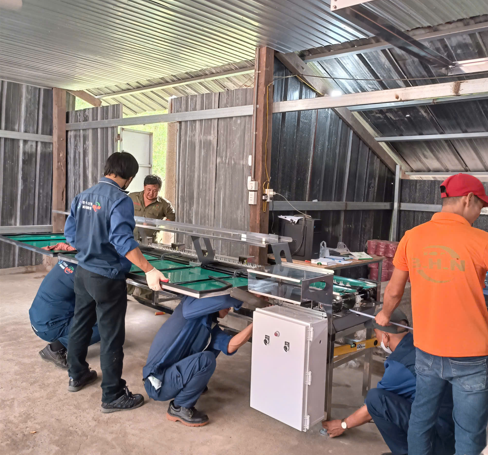
BHN designs and supplies automatic egg grading machines for commercial poultry farms, packing stations, and egg processing facilities.
Our systems offer:
- Capacities from 10,000 to 80,000 eggs per hour
- High-precision electronic weighing
- Gentle egg handling to minimize breakage
- Customizable configurations
- Professional installation and operator training
- Technical support and after-sales service
- Proven installations in Vietnam and South Korea
Whether you operate a medium-sized poultry farm or a large-scale commercial egg business, BHN can recommend the most suitable grading solution based on your production requirements.
Frequently Asked Questions
Is a 30,000-layer farm large enough for an egg grading machine?
It depends on daily production and future expansion. Farms producing around 27,000 eggs per day may continue manual grading, but automation becomes more attractive if labor shortages or business growth are expected.
Why don’t farms wait until they produce 80,000 eggs per day?
Because grading is only one part of the daily operation. Most farms prefer to finish grading in a few hours so they can focus on packing, shipping, and equipment maintenance.
What capacity egg grading machine is suitable for 45,000 eggs per day?
A 10,000 eggs/hour automatic egg grading machine is generally an excellent match for farms producing between 40,000 and 70,000 eggs per day.
Contact BHN
If you’re planning to automate your egg grading process, our engineering team can help you determine the right machine based on your daily egg production, farm size, and future expansion plans.
BASIC HUMAN NEEDS (BHN)
📍 DP-18 Dragon Parc 2, Phu Long Residential Area, Nguyen Huu Tho Street, Nha Be Commune, Ho Chi Minh City, Vietnam
📞 +84 396 298 810